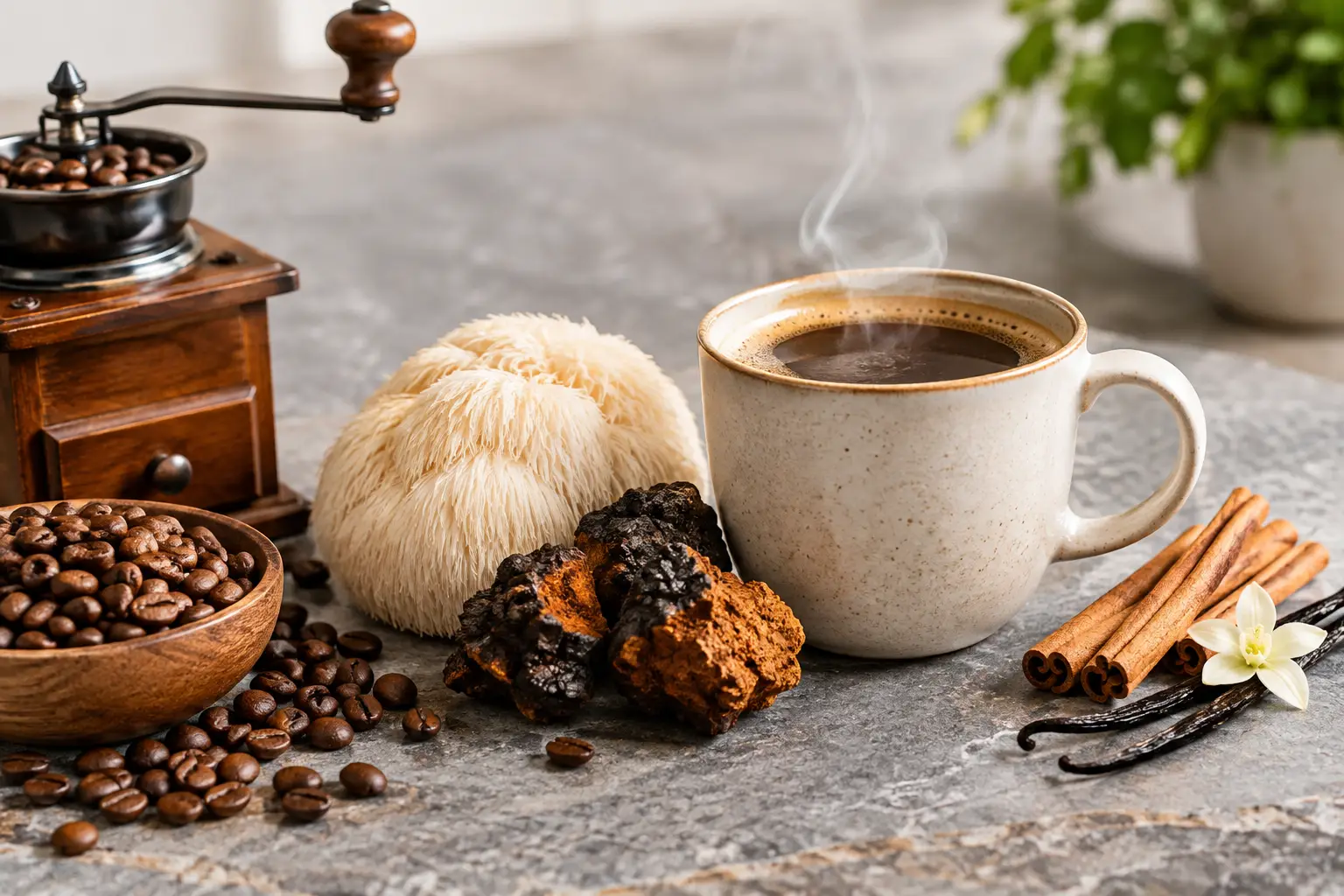
That first sip of mushroom coffee should feel like a good choice, not a leap of faith. So, are mushrooms in coffee safe? For most healthy adults, a thoughtfully made mushroom coffee can be safe to enjoy as part of a normal routine. The real answer, though, lives in the details: the ingredients, the dose, the quality of the extract, your caffeine sensitivity, and your personal health history.
Functional mushroom coffee is not the same as tossing mystery mushrooms into a mug. A quality blend uses identified mushroom ingredients, clear labeling, and food-grade manufacturing. That is where the good-vibes ritual begins.
Are Mushrooms in Coffee Safe for Most People?
Generally, yes. Chaga and Lion's Mane, two mushrooms commonly used in functional coffee, have a long history of use and are widely consumed in food and supplement formats. When they are sourced responsibly and used in reasonable amounts, many people tolerate them well.
But “natural” is not a universal safety pass. Coffee itself can cause jitters, reflux, or restless sleep in people who are sensitive to caffeine. Mushroom ingredients can also cause digestive discomfort or allergic reactions in a small number of people. A blend may be perfectly fine for your workout buddy and still not be the right fit for you.
Think of mushroom coffee as a food ritual with functional ingredients, not a magic potion. It can be a delicious way to change up your daily cup, but it should fit your body, your needs, and the rest of your wellness routine.
What Makes One Mushroom Coffee Safer Than Another?
Quality is the biggest thing to look for. The mushroom coffee category has grown fast, and not every bag is made with the same level of care. A trustworthy product should tell you what is in it without making you hunt through vague marketing language.
Start with the ingredient list. You should be able to identify the coffee, the mushroom ingredients, and any added botanicals or sweeteners. Organic certification can be a meaningful signal because it speaks to how ingredients are grown and handled, though it does not guarantee that a product will work the same way for every person.
It also helps to know whether a brand is open about its serving size and caffeine content. If a coffee blend has a lower caffeine level than a standard cup, that may be a better match for people who want a gentle lift without feeling wired. Still, lower caffeine is not caffeine-free. If you are highly sensitive, count mushroom coffee as part of your total daily caffeine intake.
Finally, avoid products that promise to treat, cure, or prevent disease. Functional ingredients may support a feel-good routine, but dramatic claims are a red flag. The best brands let great ingredients, sensible formulas, and consistent daily use do the talking.
Chaga: A Few Practical Considerations
Chaga is valued in wellness circles for its naturally occurring compounds and deep, earthy character. In coffee, it is usually used in an amount designed to complement the rest of the blend rather than take over your morning.
There is one practical point worth knowing: chaga can be high in oxalates, naturally occurring compounds that may matter for people with a history of kidney stones or kidney disease. Concentrated, high-dose use is a different situation from enjoying a standard serving in a coffee blend, but it is still smart to ask a clinician before making it a daily habit if kidney health is a concern.
Lion's Mane: Usually Gentle, Still Personal
Lion's Mane is popular with people seeking a more focused, intentional coffee ritual. Most people who use it in food or supplement amounts do not report major problems, but any mushroom can trigger an allergy in someone who is sensitive.
Stop using a product and seek medical advice if you develop symptoms such as hives, swelling, trouble breathing, or persistent digestive upset. Less dramatic signals matter, too. If a new coffee consistently leaves you feeling off, it is okay to listen to your body and choose something else.
Who Should Check With a Healthcare Professional First?
A quick check-in with a doctor, pharmacist, or qualified healthcare professional is a smart move if you are pregnant, breastfeeding, managing a medical condition, or taking prescription medication. This is not about fear. It is about making your daily ritual work with your real life.
That conversation is especially worthwhile for anyone with kidney concerns, mushroom allergies, autoimmune conditions, or a sensitive stomach. It also matters if your blend includes adaptogenic herbs. For example, ashwagandha may not be appropriate for everyone and can interact with certain medications or health conditions, including some thyroid-related situations.
If you take medications that affect blood sugar, blood pressure, immune activity, or blood clotting, bring the complete ingredient label to your appointment. “Mushroom coffee” is a broad category, and the full formula matters more than the front-of-bag buzzword.
How to Try Mushroom Coffee Without Overthinking It
The easiest approach is also the most grounded: start low, go slow, and pay attention. Have your first serving earlier in the day, preferably with food if coffee on an empty stomach does not agree with you. Keep the rest of your routine fairly normal so you can notice how the blend feels.
Give it a few days before deciding whether it belongs in your lineup. Notice your energy, digestion, sleep, and overall mood. You do not need to chase a dramatic sensation. For many people, the appeal is simpler: a tasty cup, a lighter caffeine experience, and a more intentional start to the day.
If you already drink several cups of coffee, do not automatically stack mushroom coffee on top of all of them. Try swapping it in for one cup first. This is particularly helpful with blends that include 45 milligrams of caffeine or a similar half-caffeine amount. You may find that a subtler boost is plenty for your morning.
A Better Coffee Ritual Starts With the Label
Coffee should be enjoyable, and labels should not feel like a scavenger hunt. Look for a short, understandable ingredient list and a formula that matches your preferences. Some people want plain coffee with mushroom extracts. Others enjoy a little cacao, cinnamon, vanilla, or monk fruit for a smoother, naturally cozy cup.
At Shroovy, that idea shows up in Coffee+, a small-batch blend of organic Arabica coffee, Chaga, Lion's Mane, ashwagandha, cacao, Ceylon cinnamon, natural vanilla, and monk fruit. The formula is made with half the caffeine of a typical cup of coffee, offering a subtle boost for people who want to ease up on the jitters without giving up their coffee moment.
The point is not that one blend is right for everybody. The point is to choose a formula that is transparent, tastes good to you, and feels easy to keep in your day.
The Bottom Line on Mushroom Coffee Safety
Mushrooms in coffee can be a safe and enjoyable choice for many adults, especially when the product uses clearly identified ingredients and sensible serving sizes. The trade-off is that no functional food is one-size-fits-all. Your health history, medications, allergies, caffeine tolerance, and the actual formula all deserve a place in the decision.
Choose thoughtfully, start with one serving, and let your body have a vote. The best daily ritual is not the trendiest one - it is the one that leaves you feeling genuinely good when the mug is empty.