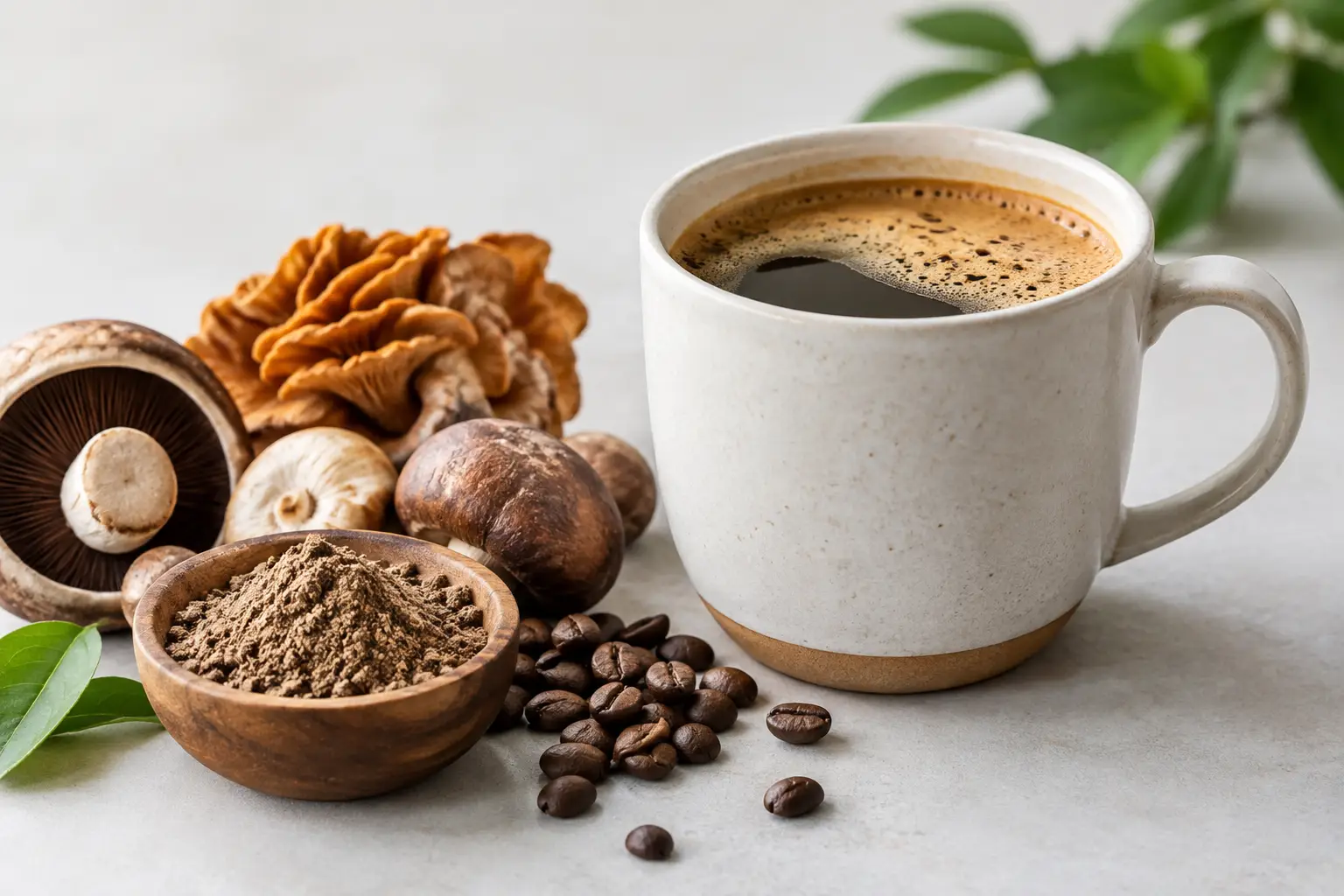
That wired-but-weary feeling after a second cup is a pretty clear sign that coffee can be both a joy and a lot. Mushroom coffee caffeine content is worth looking at if you love your morning ritual but want a smoother lift, fewer jitters, and less of an afternoon drop-off.
The short answer: mushroom coffee is not automatically low caffeine. Its caffeine level depends mostly on how much actual coffee is in the blend, the serving size, and whether the brand uses regular or decaffeinated coffee. Functional mushrooms and other plant-based ingredients may change the flavor and overall experience, but they are not the source of coffee's caffeine.
For anyone trying to find their sweet spot, the label matters more than the words mushroom coffee on the front of the bag.
What is mushroom coffee caffeine content?
Mushroom coffee generally combines coffee with functional mushroom ingredients, often in powdered or extracted form. Since coffee is still in the cup, caffeine is usually there too. How much is another story.
A traditional brewed cup of coffee is often around 80 to 100 milligrams of caffeine, though it can be lower or much higher depending on the bean, roast, brew method, and cup size. Some mushroom coffee blends are made with a full-strength coffee base and land close to that range. Others use less coffee per serving, making them a more moderate option. Decaf versions can contain only a small residual amount.
That is why two products with similar-looking packaging can deliver very different experiences. One may feel like your standard morning coffee. Another may be designed for people who want coffee flavor and a subtle boost without going full throttle before 9 a.m.
Why caffeine levels vary so much
Caffeine is not determined by the mushrooms themselves. The biggest factor is the coffee-to-everything-else ratio in each serving. A blend with a generous portion of instant coffee will generally have more caffeine than one where coffee shares more space with mushroom ingredients, cacao, spices, or adaptogens.
The type of coffee matters as well. Arabica coffee is commonly associated with a smoother flavor profile and generally contains less caffeine by bean weight than robusta. Still, that does not tell the whole story. A strong serving of Arabica can contain more caffeine than a small serving made with another bean. The serving instructions are what bring the real answer into focus.
Preparation can make a difference, too. With instant coffee, the amount of powder you scoop is usually the amount of caffeine you get. With brewed coffee, variables such as grind size, brew time, water temperature, and your enthusiastic free-pour can make the final cup less predictable.
Then there is the very human factor: your own caffeine sensitivity. Forty-five milligrams may feel pleasantly energizing to one person and barely noticeable to someone used to multiple large coffees. For another person, especially someone who is sensitive to caffeine or drinks it later in the day, it may be exactly enough.
More ingredients does not mean no caffeine
Functional mushroom blends sometimes create confusion because their wellness-focused ingredients are front and center. Chaga and Lion's Mane, for example, do not naturally provide the stimulant effect people associate with coffee. The caffeine comes from the coffee ingredient.
That distinction is actually helpful. It lets you choose a blend based on both sides of the cup: the amount of caffeine you want and the ingredients you want alongside it. You do not have to choose between an all-or-nothing coffee experience and a caffeine-free beverage.
Is lower-caffeine mushroom coffee right for you?
A lower-caffeine blend can be a great fit if regular coffee makes you feel shaky, anxious, overly hungry, or ready for a nap a few hours later. It can also be useful for people who love the taste and ritual of coffee but are working on cutting back from several high-caffeine cups a day.
The trade-off is straightforward: less caffeine may mean a gentler energy shift. If you rely on a strong cup to power through an early workout, a long drive, or an especially short night, a moderate-caffeine blend may feel different from your usual dark roast. That does not make it less effective. It just calls for a different expectation.
Many people find that a lower-caffeine coffee works best as their first cup, when they want to ease into the morning rather than spike their system. Others enjoy it as a midday coffee moment because it is less likely to leave them staring at the ceiling at bedtime. Timing still matters, especially if caffeine tends to linger for you.
If you are pregnant, breastfeeding, managing a health condition, taking medications, or have been advised to limit caffeine, check with a qualified healthcare professional about what amount makes sense for you. A wellness ritual should fit your life, not create a new source of guesswork.
A 45 mg cup: the middle-ground approach
Shroovy Coffee+ is crafted with 45 milligrams of caffeine per serving, about half the caffeine of a typical cup of regular coffee. That is intentional. The goal is not to turn your morning into a caffeine endurance event. It is to offer a subtle, steady-feeling boost while keeping the coffee ritual delicious.
The blend starts with organic Arabica instant coffee and includes organic Chaga and Lion's Mane, plus ashwagandha. Cacao powder, Ceylon cinnamon, natural vanilla, and monk fruit bring a cozy, lightly sweet flavor that can make black coffee drinkers happy while also welcoming people who usually reach for a flavored latte.
At 45 milligrams, you can still get that familiar coffee cue: a little more alertness, a little more ready-to-go energy, and a warm mug that tells your brain the day is officially underway. But it is designed to leave more room for calm. For plenty of people, that is the good-vibes zone.
How to read a mushroom coffee label
Do not let a long ingredient list distract from the one line that answers your caffeine question. Look for a stated caffeine amount per serving, usually listed in milligrams. If a product does not give one, check how much coffee is included per serving and consider asking the company directly.
Next, look at serving size. A number only means something in context. If the serving suggestion calls for two scoops, but you naturally use one, your caffeine intake will be lower. If you double up because you want a bigger mug, it will be higher.
It also helps to compare your full day, not just your first cup. A 45 mg morning coffee plus an afternoon energy drink, pre-workout, tea, or a few squares of dark chocolate can add up faster than expected. You do not need to track every milligram forever, but noticing your patterns can explain a lot about your energy and sleep.
Make the switch without making it miserable
If you are used to strong coffee, start by replacing one cup rather than changing everything at once. Try a moderate-caffeine mushroom coffee in the morning for several days and pay attention to how you feel before lunch, after lunch, and at bedtime. Energy is not just about the first 20 minutes after your cup.
Keep the ritual enjoyable. Make it hot, pour it over ice, add your preferred milk, or blend it into a smoothie if that is your thing. A coffee habit lasts when it tastes good enough to look forward to, not when it feels like homework.
Your best caffeine level is personal. It is the amount that helps you show up for the workout, the meeting, the school run, or the slow Saturday morning without borrowing too much energy from the rest of your day. Start with the cup that feels good, then let your own routine tell you what belongs in it.