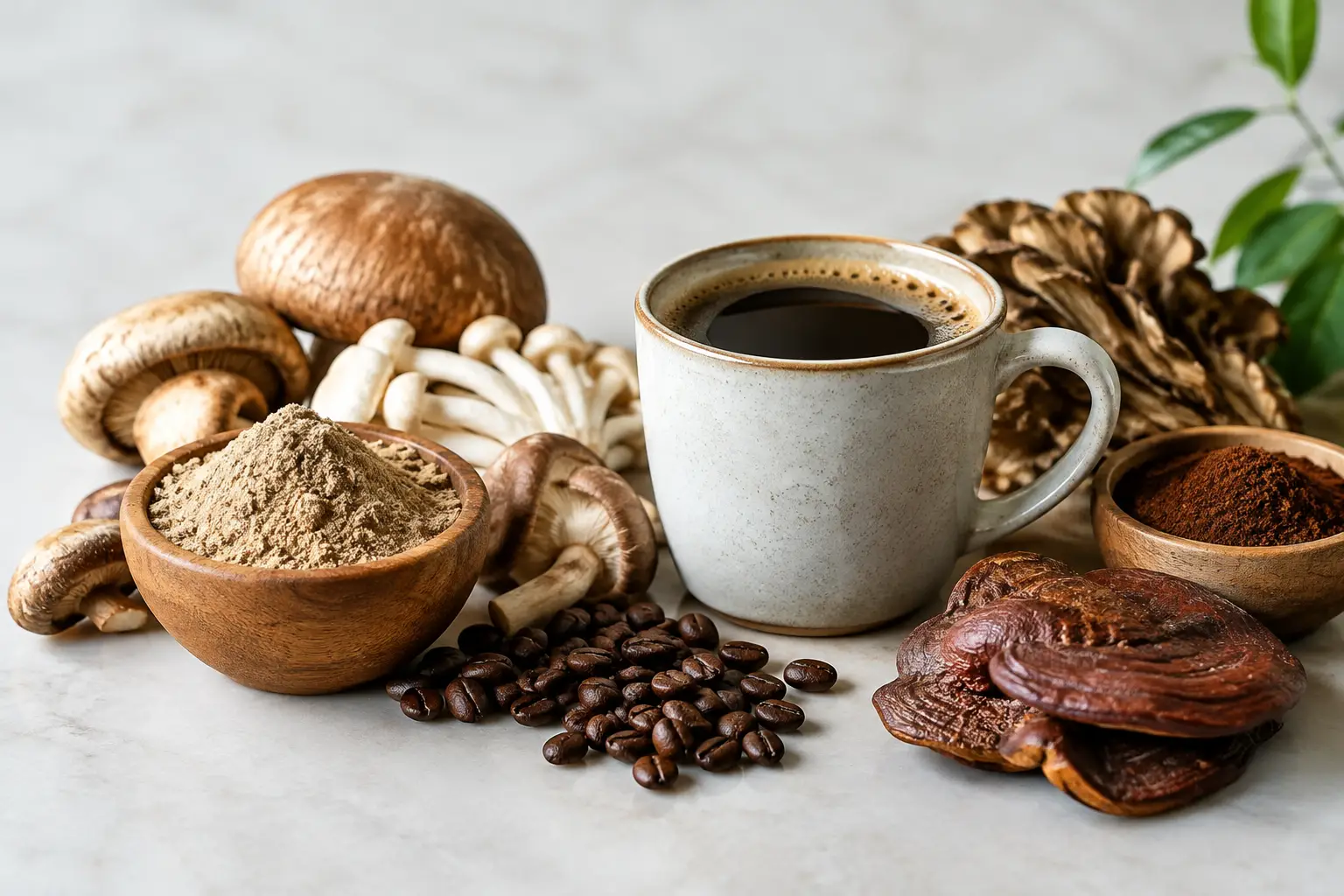
Your morning cup can do more than taste good, but only if the mushroom coffee ingredients are chosen with real intention. A random scoop of instant coffee plus a trendy mushroom powder is not the same thing as a balanced daily ritual. The coffee, mushrooms, adaptogens, flavors, sweetness, and caffeine level all shape how the cup tastes and how it fits into your day.
For us, good vibes start with knowing what is actually in the bag. A thoughtful blend should feel delicious enough to look forward to, simple enough to make on a busy morning, and considered enough to earn a place in your wellness routine.
What Are Mushroom Coffee Ingredients?
Mushroom coffee is coffee blended with functional mushroom ingredients and, sometimes, botanicals or natural flavors. The goal is not to make your coffee taste like a walk through the forest. The goal is to pair familiar coffee energy with ingredients people often include in wellness routines for focus, balance, or everyday support.
That broad category covers a lot of ground. Some blends are plain coffee with a single mushroom ingredient. Others add sweeteners, creamers, spices, or adaptogens. Neither approach is automatically better. It depends on what you want from the ritual. If you love black coffee and want a minimal ingredient panel, a simpler blend may fit. If you want a smooth, lightly sweet cup that needs nothing else added, a more complete formula can make mornings easier.
The best question is not, “Does it contain mushrooms?” It is, “Do the ingredients make sense together?” A well-made blend gives every component a job, from the coffee base to the final touch of cinnamon.
The Mushroom Coffee Ingredients in a Thoughtful Blend
Shroovy Coffee+ is made with eight USDA Certified Organic ingredients. Each one brings something to the cup, whether that is a familiar coffee note, a functional element, or a little extra magic in the flavor department.
Organic Arabica coffee
Coffee is still the heart of mushroom coffee. Organic Arabica coffee brings the aroma, body, and satisfying roasted flavor people expect from their morning cup. It also provides caffeine, which is why the amount matters just as much as the source.
A full-force coffee can be perfect for some mornings, but it is not everyone’s best move every day. Coffee+ is crafted with 45 mg of caffeine per serving, about half the caffeine of a regular cup of coffee. That creates a subtle lift without making the experience feel like a roller coaster of jitters followed by an afternoon crash.
Organic Chaga mushroom
Chaga has a long history of traditional use and has become a familiar name in functional mushroom routines. It is often appreciated for its naturally occurring compounds and its place in an overall wellness-focused lifestyle.
In coffee, Chaga is especially appealing because it can complement a grounded, rich flavor profile rather than compete with it. Still, a mushroom ingredient should never be treated as a shortcut to perfect health. Think of it as one supportive part of a bigger picture that includes sleep, movement, nourishing food, and the daily habits that keep you feeling like yourself.
Organic Lion’s Mane mushroom
Lion’s Mane is one of the most talked-about functional mushrooms, particularly among people looking to support focus and mental clarity. That makes it a natural match for a morning ritual, a pre-workout routine, or the first cup before a creative work session.
Research on functional mushrooms is growing, but individual experiences vary. Your response can depend on your routine, your sensitivity to caffeine, the rest of your diet, and plain old human biology. The win is finding a cup you genuinely enjoy drinking consistently, not chasing a dramatic overnight change.
Organic Ashwagandha
Ashwagandha is an adaptogen, a category of botanicals commonly used in wellness traditions to support the body’s response to everyday stress. It brings a different kind of intention to mushroom coffee: less about a hard jolt of energy and more about a steadier-feeling ritual.
Adaptogens are not one-size-fits-all. People who are pregnant, nursing, managing a health condition, or taking medication should check with a qualified healthcare professional before adding ashwagandha or any new botanical to their routine. A smart wellness practice includes paying attention to what works for your body.
Organic cacao powder
Cacao adds the soft, chocolatey depth that makes a functional coffee feel more like a treat than a chore. Beyond its rich flavor, cacao naturally contains plant compounds and is a welcome partner for coffee’s roastier notes.
The key is restraint. Too much cacao can turn a coffee blend into something muddy or overly heavy. In the right amount, it rounds the edges and gives the cup a cozy, café-style finish without asking you to pull out a dozen ingredients from the pantry.
Organic Ceylon cinnamon
Ceylon cinnamon brings gentle warmth and a naturally sweet-smelling spice note. It can make a coffee taste more complete even when there is very little added sweetness. That matters for people who want a flavored coffee experience without the syrupy, dessert-like finish found in many ready-made drinks.
Its role is small but mighty. Cinnamon helps connect the cacao, vanilla, and coffee into one cohesive sip instead of a bunch of flavors competing for attention.
Organic natural vanilla and monk fruit
Vanilla makes the whole blend feel friendlier. It softens the darker coffee and cacao notes, while monk fruit provides sweetness without loading the cup with sugar. Together, they help create a cup that can stand on its own with hot water, though a splash of milk or your favorite alternative can make it even creamier.
Sweetness is personal, so this is one of the biggest trade-offs when choosing mushroom coffee. Someone who drinks unsweetened black coffee may prefer a more neutral formula. Someone trying to replace a sugary morning latte may love a lightly sweet blend that makes the switch feel easy. Neither preference needs defending. Your coffee should work for your real life.
Why Ingredient Quality Matters More Than a Long Label
A crowded supplement-style label is not automatically a better label. In fact, when a blend tries to be everything at once, the flavor can suffer and it becomes harder to understand what you are drinking. Clear, recognizable ingredients are a good sign that a brand has put thought into both function and taste.
Organic certification is another useful detail to look for, especially when coffee, mushrooms, herbs, and spices are part of the same daily ritual. It signals that the ingredients meet USDA organic standards. It does not make a product magical, but it is a meaningful quality marker for people who care about what goes into their cup.
It also helps to look beyond the front of the package. Check the caffeine amount, serving size, sweetener, and full ingredient panel. If a brand makes vague promises but will not clearly tell you what is in the blend, that is a reason to keep browsing.
How to Make Mushroom Coffee Part of Your Routine
The simplest approach is usually the one that sticks. Mix instant mushroom coffee with hot water before a walk, on the way to an early class, or during that quiet pocket of time before the rest of the house wakes up. If you like an iced coffee, dissolve it first in a small amount of warm water, then add ice and milk.
Give the routine a little runway. Rather than changing your entire morning at once, swap one regular coffee for your mushroom coffee and notice the basics: flavor, energy, focus, digestion, and how you feel later in the day. That kind of low-pressure experiment is more useful than expecting a single cup to transform everything.
The best mushroom coffee ingredients are not there to turn your life upside down. They are there to make one small, delicious part of your day feel a little more intentional - your daily dose of good vibes, one easy cup at a time.