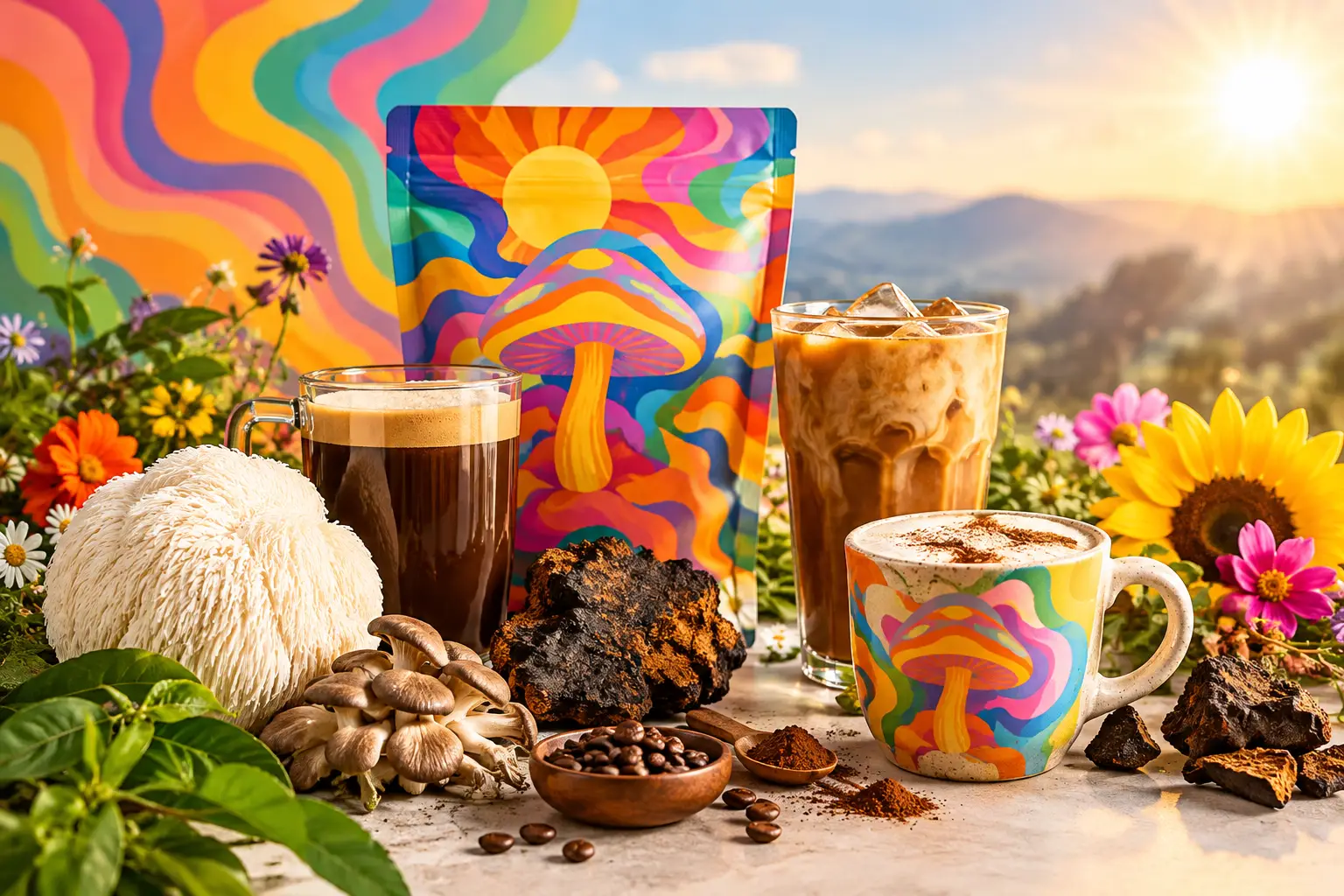
A coffee aisle can tell you a lot about where people’s heads are at. More shoppers are reading ingredient labels, trading the mega-jolt for a more measured cup, and asking whether their everyday rituals can feel a little more intentional. That curiosity is helping drive the rising demand for adaptogens - a broad category of botanicals and fungi that has moved from niche wellness shelves into morning mugs.
The appeal is easy to understand. Coffee is already a daily ritual for millions of people. Add interesting, thoughtfully sourced ingredients, and suddenly that familiar cup becomes a small moment of exploration. Still, adaptogens deserve more than a trendy label and a trippy package. Knowing what the term means, what the research does and does not say, and how to choose a product thoughtfully keeps the good vibes grounded.
What are adaptogens, exactly?
“Adaptogen” is not a formal medical category or a guarantee of a particular result. It is a term commonly used for certain plants and fungi traditionally associated with helping the body adapt to stress. In modern wellness culture, it often appears on labels for powdered blends, teas, coffees, and supplements.
Ashwagandha is one of the best-known botanicals in this conversation. It has a long history of use in Ayurvedic traditions and is now widely studied, although research varies by preparation, amount, population, and outcome being measured. That last part matters. One study of a standardized extract cannot automatically tell us what every product containing the ingredient will do.
Functional mushrooms often enter the same conversation, even though “functional mushroom” and “adaptogen” are not interchangeable terms. Lion’s Mane and Chaga, for example, are mushrooms valued for their long culinary and traditional-use histories. They are frequently included in modern food and beverage blends because people enjoy bringing more variety and intriguing ingredients into their routines.
Why the rising demand for adaptogens feels different now
This trend is not just about chasing the next buzzy powder. It reflects a shift in how many people approach everyday choices. Instead of saving wellness for a once-in-a-while reset, they want small, repeatable rituals that fit real life: a cup before the school run, an iced drink between meetings, or a cozy mocha moment after a surf-check kind of morning.
Several forces are working together. People are more interested in ingredient transparency, less impressed by vague “miracle” messaging, and increasingly drawn to foods that feel both familiar and a little more purposeful. Coffee is a natural place for this interest to land because it is already beloved, portable, and pleasantly ritualistic.
There is also a flavor factor. Early wellness drinks sometimes asked people to endure a grassy, bitter, or mysterious taste in the name of being virtuous. Thankfully, the bar has risen. Many curious coffee drinkers want ingredients they recognize paired with a flavor they actually look forward to. Revolutionary concept: your morning beverage can be interesting without tasting like a forest floor.
Coffee is a natural home for functional ingredients
A well-made mushroom coffee can make the category far more approachable than a cabinet full of capsules. The key word is “well-made.” A blend should start with coffee you would want to drink anyway, then use complementary ingredients and a clear label rather than hiding behind a laundry list of trendy names.
For people who enjoy a gentler caffeine routine, formulation matters, too. Caffeine levels vary widely between beverages, and lower-caffeine options may suit someone who wants coffee flavor without the intensity of a standard large cup. That does not make lower caffeine universally better. Some people prefer a bolder brew, while others appreciate a more moderate lift. Your ideal cup depends on your habits, sensitivity, schedule, and what else is in your day.
Organic sourcing is another meaningful consideration. USDA Certified Organic products must meet specific production and handling standards. For shoppers who prioritize organic ingredients, that certification offers a clearer point of reference than broad, feel-good wording alone. It is one practical way to compare products in a crowded category.
How to shop without getting swept up in the hype
Curiosity is great. Magical thinking, less so. The most satisfying way to explore adaptogen-forward beverages is to treat the package like a conversation starter, not a crystal ball.
First, check what is actually in the blend. Look for named ingredients instead of vague proprietary language when possible. If an ingredient is important to you, you should be able to find it on the label. Consider the coffee source, added sweeteners, flavoring approach, and caffeine information as part of the whole picture.
Next, be skeptical of dramatic promises. Foods and beverages are not a substitute for sleep, balanced meals, movement, medical care, or the very underrated act of taking a lunch break. A product that promises to transform every corner of your life overnight is selling more fantasy than functional nourishment.
Finally, pay attention to how a beverage fits your own routine. A mocha blend may be your ideal weekday shortcut, while a plain coffee may be your weekend move. Some people prefer drinks with no added sweetness, while others want a café-style flavor that makes their at-home ritual feel more fun. Both are valid. The best ritual is the one you will genuinely enjoy returning to.
A shroovy way to try the trend
If you are curious but not ready to turn your kitchen into an apothecary, Shroovy Organic Mushroom Coffee offers a friendly on-ramp. This small-batch, USDA Certified Organic instant mocha coffee combines organic Arabica coffee with Lion’s Mane, Chaga, and Ashwagandha, plus organic cacao powder, Ceylon cinnamon, natural vanilla, and monk fruit. It can be enjoyed hot or iced, and each serving contains approximately 45 mg of caffeine, subject to current product labeling.
The point is not to make a coffee cup carry impossible expectations. It is to make room for a delicious, organic ritual with ingredients chosen thoughtfully. For newcomers, a mocha profile can feel pleasantly familiar. For experienced functional-coffee fans, it is a convenient option when grinding beans and frothing milk sounds like a little too much before 9 a.m.
A quick word on safety and expectations
Natural does not automatically mean right for every person. Botanicals can interact with medications or be unsuitable during pregnancy or breastfeeding, and individual tolerances vary. If you have a health condition, take prescription medication, or have questions about a specific ingredient, speak with a qualified healthcare professional before adding a new adaptogen-containing product to your regular routine.
It is also smart to begin simply. Try one new product at a time, follow its serving guidance, and notice the practical stuff: Do you like the flavor? Does the caffeine level work for you? Can you see yourself making it part of your morning without overthinking it? Those are more useful questions than expecting a single drink to rewrite your whole day.
Frequently asked questions
Are adaptogens the same as functional mushrooms?
Not exactly. Adaptogen is a broad wellness term often applied to certain botanicals and fungi. Functional mushrooms are mushrooms used in food, beverages, or traditional practices. The categories can overlap in conversation, but they do not mean the same thing.
Does mushroom coffee taste like mushrooms?
It depends on the formula, but a thoughtfully flavored blend should taste like coffee first. In a mocha-style drink, cacao, cinnamon, vanilla, and coffee notes can create a familiar café-style flavor rather than a savory mushroom taste.
Is mushroom coffee caffeine-free?
Not necessarily. Some mushroom beverages contain coffee and therefore caffeine, while others do not. Always check the label. Shroovy Organic Mushroom Coffee contains approximately 45 mg of caffeine per serving, subject to current product labeling.
Can adaptogen drinks replace a balanced routine?
No. They can be an enjoyable part of a routine, but they cannot replace nourishing meals, sleep, hydration, movement, or professional medical advice when you need it.
The rising interest in adaptogens says something hopeful: people want their everyday choices to feel a little more considered, colorful, and connected to how they live. Keep your standards high, your expectations sensible, and your mug filled with something you truly enjoy. That is a daily dose of good vibes worth making time for.